Sharswood “Choice Neighborhood” Initiative
About the Project
In 2022 Mural Arts Philadelphia launched an innovative, multi-year partnership with the Philadelphia Housing Authority (PHA) to invest in new public art projects in Sharswood, a neighborhood in North Central Philadelphia.
The projects, which range from new and restored murals to placemaking in public spaces to a prototype sidewalk poetry project, were developed as a “critical community investment” supporting the transformation of the PHA’s Blumberg Apartments into a neighborhood with mixed-income housing and a variety of community improvements.
The Sharswood projects are part of an ongoing collaboration with PHA that also includes projects in North Central Philadelphia and Bartram’s Village, as one of the broadest collaborations between an arts organization and a housing authority anywhere in the country. Mural Arts is received funding from the Pennsylvania Housing Finance Agency’s PHARE program (Housing Affordability and Rehabilitation Enhancement).
Learn more about the artwork and community engagement programs that emerged from this partnership below.
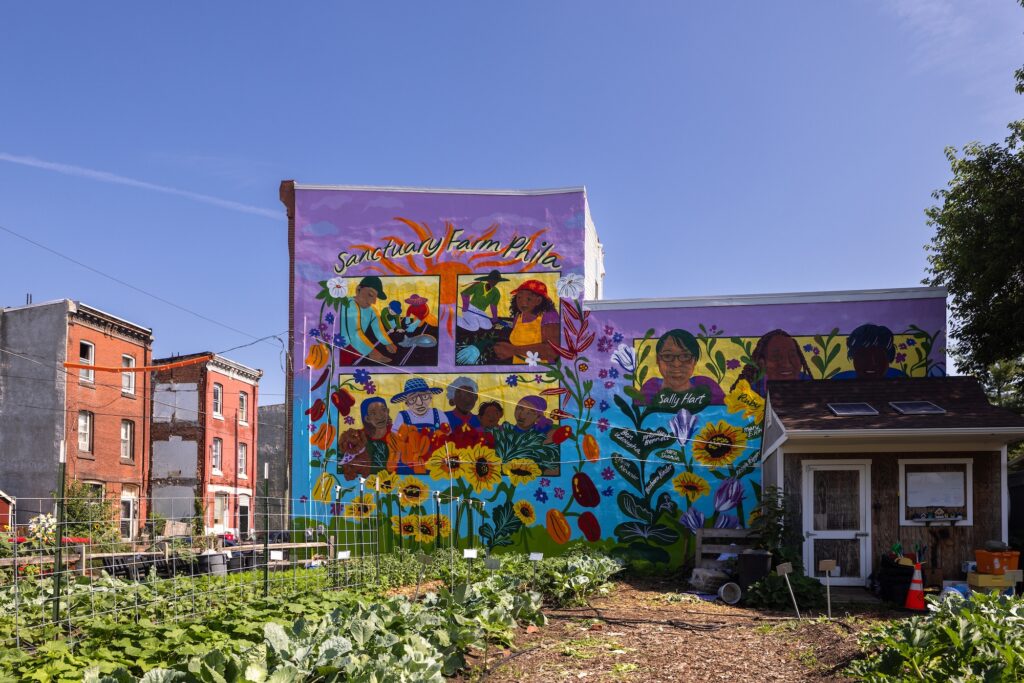
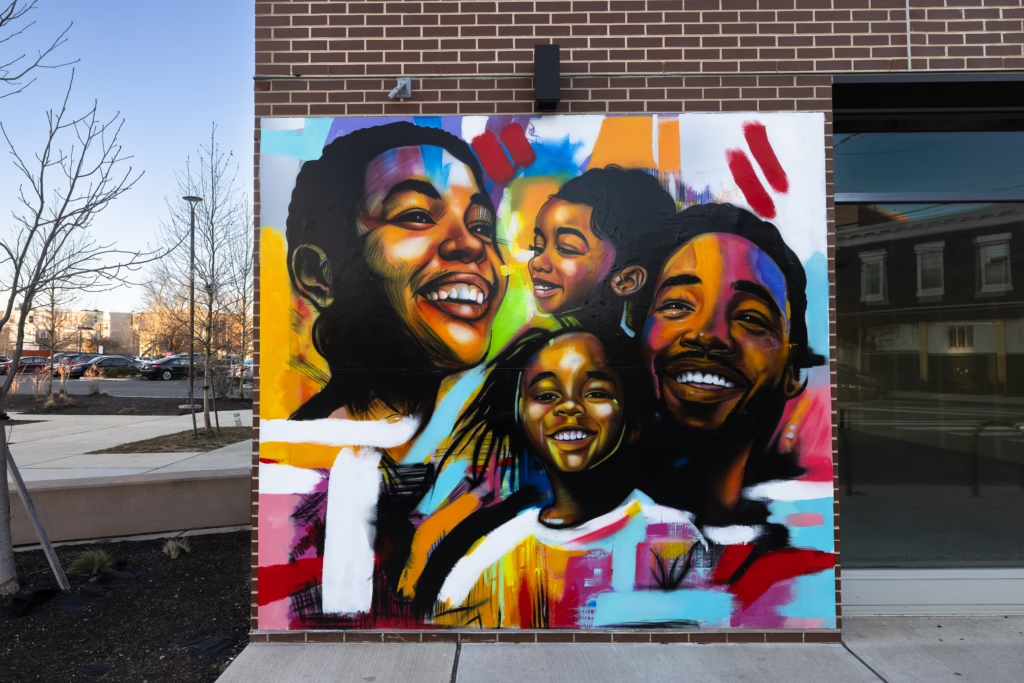
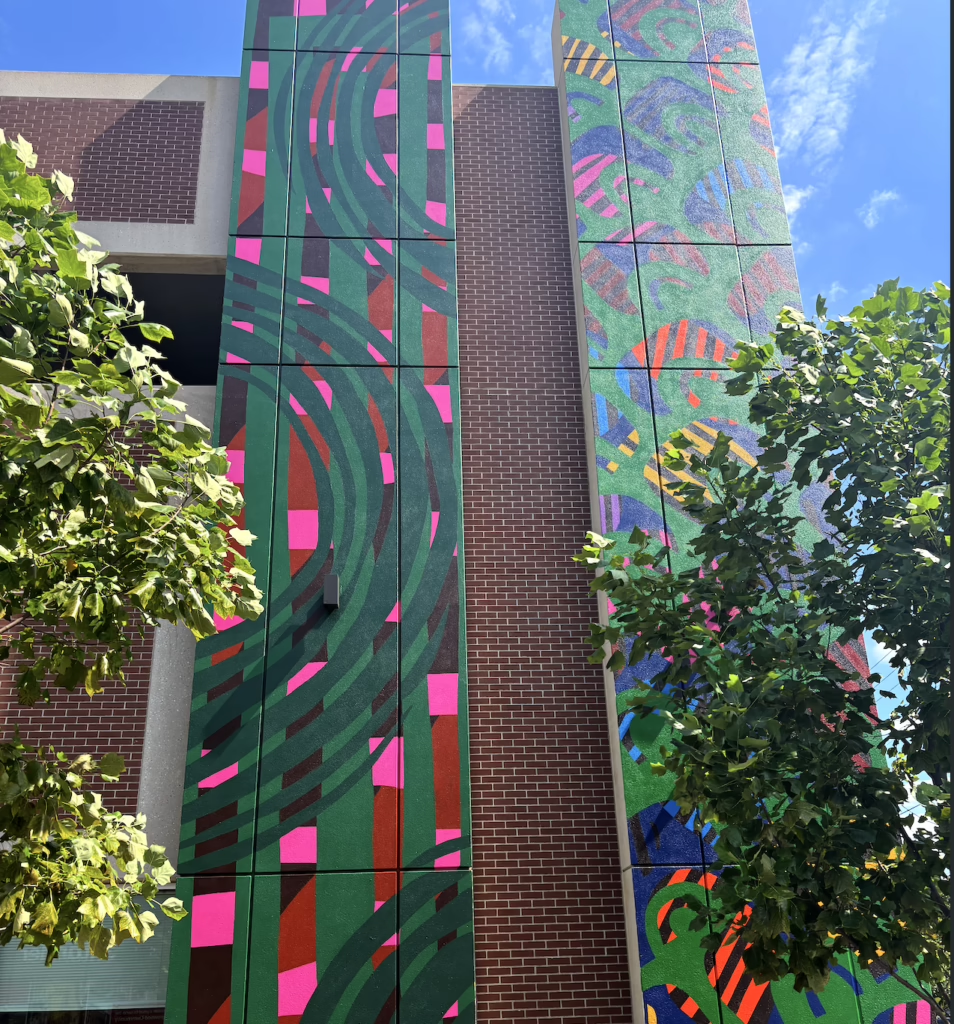
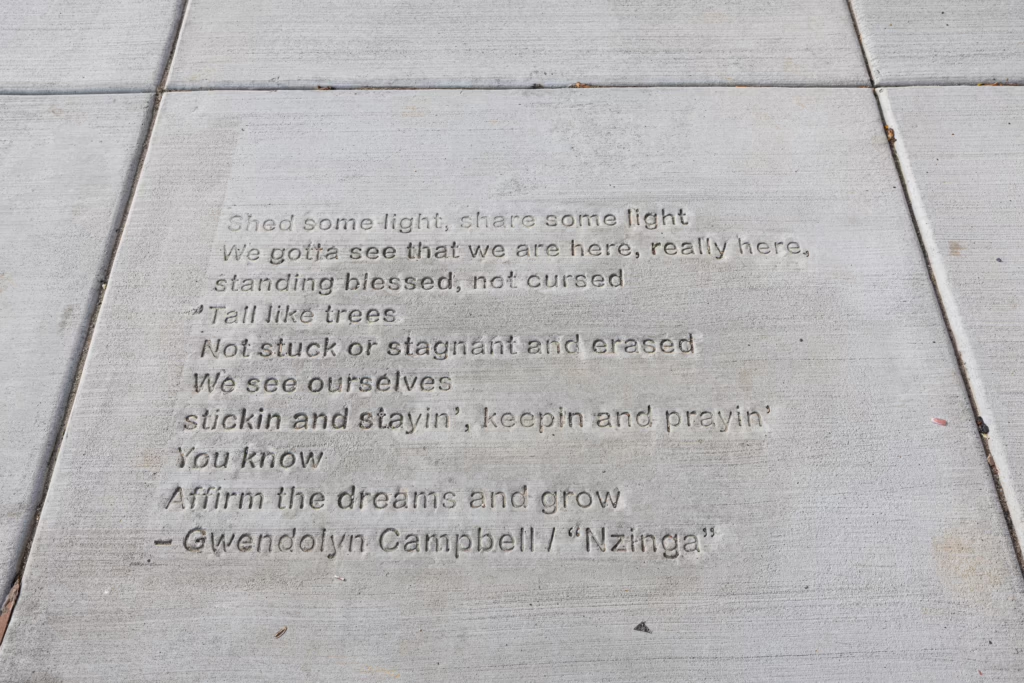
Three of these public art projects will be dedicated at Webb Plaza on October 30. RSVP to celebrate with the Sharswood community!
Community Engagement
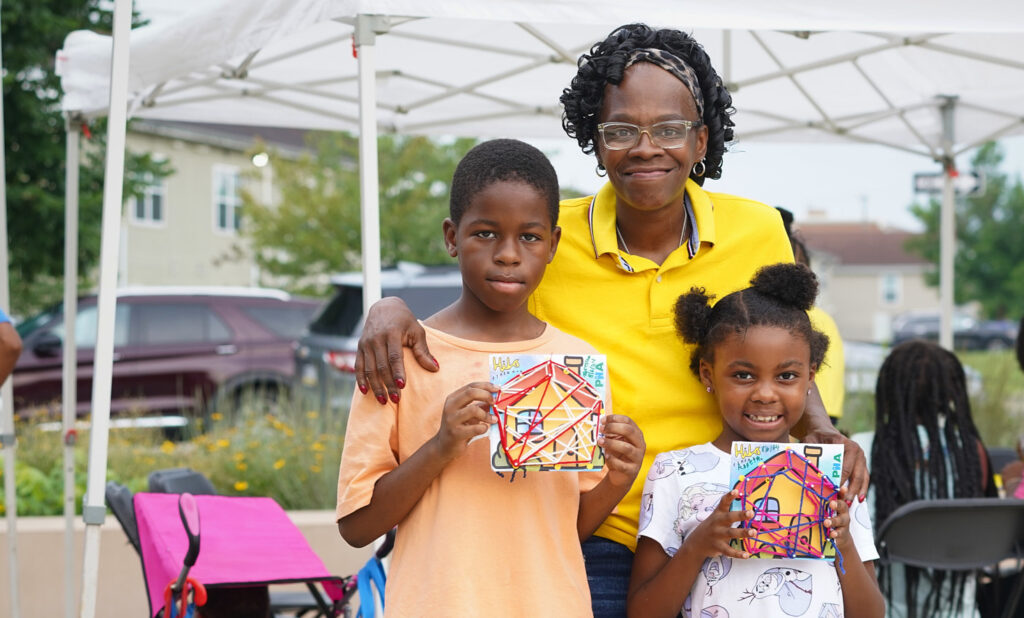
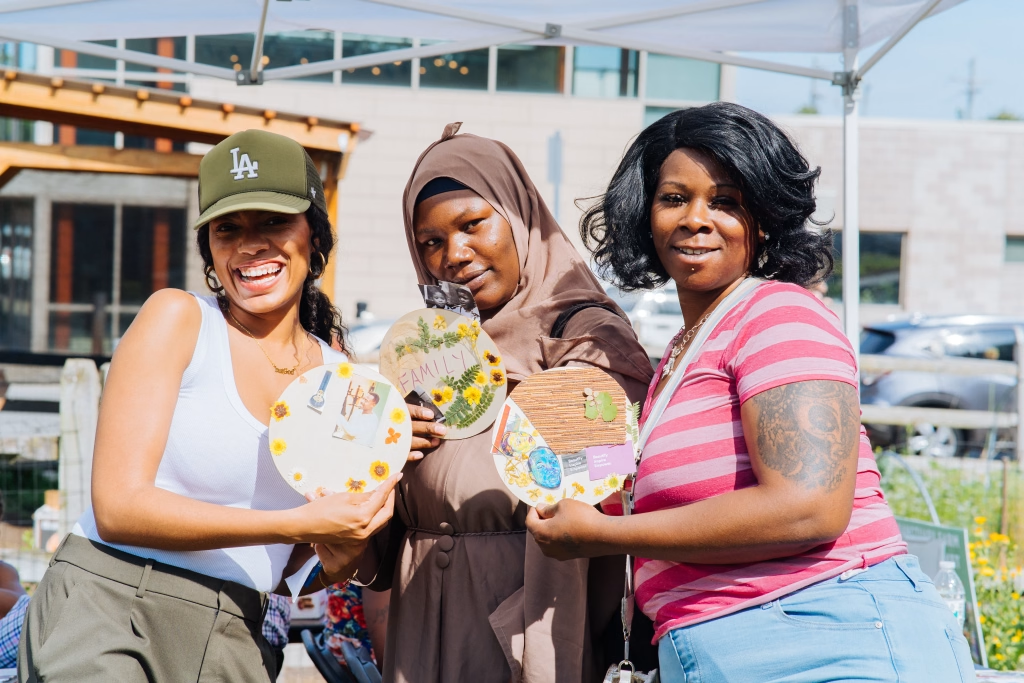
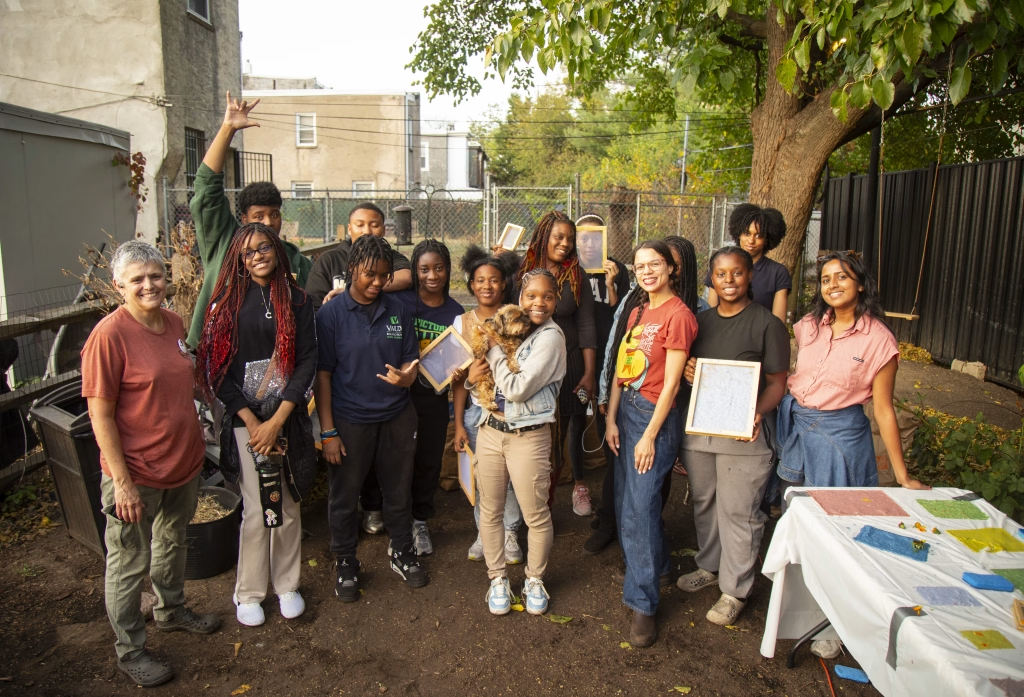
From 2024-2025 Mural Arts organized an Art Hub initiative with events in various public spaces, including an afternoon art club at the Vaux Big Picture School led by Cindy Lozito. These projects helped the project team—artists and staff—meet with Sharswood residents in fun and informal settings, for afternoons of artmaking and discussion. Artists Dyymond Whipper-Young and Eric Battle have helped lead these events.


About the Sharswood “Choice Neighborhood” Initiative
In 2015 the Blumberg Apartments and area surrounding them were designated as a “Choice Neighborhood” by the U.S. Department of Housing and Urban Development (HUD). PHA obtained a federal grant to develop a plan for using public and private funding to support locally-driven strategies in a comprehensive approach to neighborhood transformation, including the replacement of the Blumberg apartment towers with low-rise, mixed-income housing (one of the original towers, with housing for seniors, remains). In 2020, PHA received a HUD Choice Neighborhoods Implementation Grant, which is catalyzing more than $300 million worth of “neighborhood, housing and people” goals and strategies.
Those strategies include the creation of more than 600 units of housing (replacement public housing, low-income and market-rate rental, and workforce and market-rate homeownership units), on site of the former Blumberg Apartments and on property PHA acquired throughout the neighborhood, as well as rehabilitation of existing housing.
They also include neighborhood-focused items like a fully-realized Peace Park, a new Ridge Avenue Shopping Center and supermarket, and a small business incubator. Community residents will have access to resources for improving education, health, and job preparedness via new and continuing programs based at a workforce center in the former Vaux School.
Mural Arts public art projects are envisioned as a thread the weaves together all aspects of the program–neighborhood, housing, and people.
History of Sharswood
Sharswood’s modern history can be traced to Philadelphia’s late nineteenth-century industrial era, when it was transformed from agricultural lands to a neighborhood of row houses for workers, many of them German immigrants, in the breweries that were built in the area to take advantage of water from the Schuylkill River.
About a century ago, the neighborhood was invigorated by the influx of Black Americans moving from the segregated South to seek work in Northern industrial cities, in the early years of what is now called the Great Migration. Ridge Avenue became a significant corridor for Black-American culture, rivaling areas like Harlem in New York and the Hill District in Pittsburgh, and Columbia Avenue (now Cecil B. Moore Avenue) became a bustling corridor of businesses serving Black Philadelphians.
From an artistic and cultural point of view, this time became known as Philadelphia’s Black Renaissance. But conditions in Sharswood were difficult. The neighborhood quickly became segregated and outside of the war years work could be hard to find. By the 1960s, when much of the nation was enjoying the benefits of the postwar economic expansion, Sharswood was experiencing some of the city’s worst housing conditions, highest rates of unemployment, poor educational attainment and a markedly lower average income.
Sharswood became a locus of action for racial and economic justice. In 1964, tensions between Black Philadelphians and the police erupted after officers attempted to intervene in a domestic dispute. Three days of unrest followed, with nearly 800 arrests and the destruction of nearly 200 properties, particularly on Columbia and Ridge Avenues. In 1965, following years of legal actions against Girard College’s whites-only policy, activists launched a months-long protest at the college and the state office building downtown, attracting Rev. Martin Luther King, Jr. in support and resulting in the integration for the school in 1968. (The “Cecil B. Moore Freedom Fighters” were commemorated in a mural completed in 2021.)
Community revitalization efforts began in this era, as well. In 1966, to improve neighborhood conditions, the Philadelphia Housing Authority built the Norman Blumberg Apartments, three towers surrounded by low-rise buildings on an eight-acre site along 23rd Street just south of Ridge Avenue.
However, as Philadelphia lost industrial jobs and population in the last third of the twentieth century, Sharswood was hard hit. Disinvestment took hold: businesses closed on Ridge Avenue, residents left and schools closed. Many of the families that remained in Sharswood, including those in Blumberg Apartments, were experiencing deep and sustained poverty.
Fifty years later, change is looming in Sharswood. In the last decade or so, Philadelphia has experienced reinvestment and population growth driven largely by its successful service, education, health and research sectors. Real estate investment pressures have reached Sharswood, advancing from Brewerytown to the west, Fairmount / Franklintown to the south, and the Temple University area to the east. Sharswood residents and business owners, whose resiliency sustained them through decades of disinvestment, are now facing pressures of displacement.