The Thankful Poor
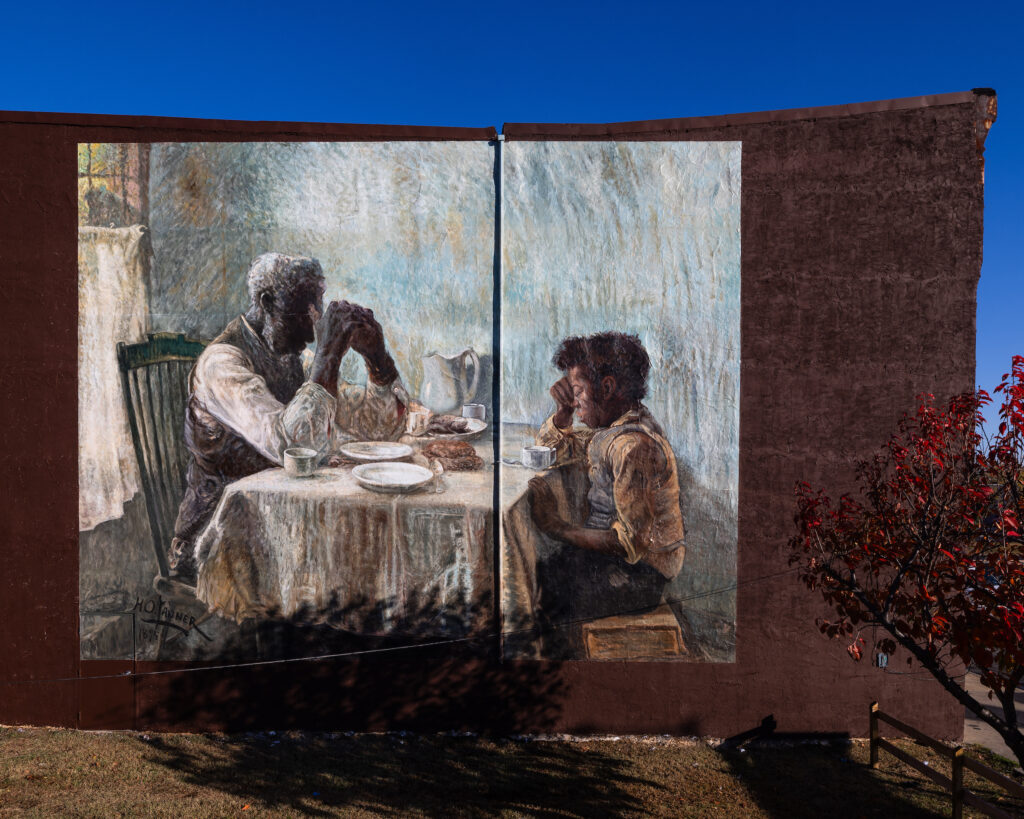
In 2024, renowned Atlanta-based artist George A. Morton reimagined Tanner’s vision for Strawberry Mansion. Morton, celebrated for his Dutch Old Masters-inspired style, brings a unique depth and artistry to this project. His acclaimed journey—captured in the award-winning HBO documentary Master of Light—reflects themes of overcoming adversity, illuminating both his creative prowess and his insights into social justice and intergenerational healing.
George A. Morton – Artist Statement:
“The Tanner Project emerged from a desire to engage Henry Ossawa Tanner’s The Thankful Poor not as an image to be referenced, but as a living source of ethical and visual instruction. Tanner’s work has long mattered to me because of its restraint—its refusal of spectacle in favor of dignity, interiority, and moral presence. That discipline felt especially important in a public context. When I curated and led the Thankful Poor mural project in Philadelphia, the intention was to translate those values into scale: to create a work that could be seen from blocks away, yet still reward quiet attention. The mural was designed to function as a visual anchor within the neighborhood—an image that does not shout, but holds. Its visibility invites approach; its stillness invites reflection. At the time, the project marked an important threshold in my practice. It was one of the first moments where studio discipline, historical lineage, and public transmission aligned in a way that felt complete. The mural did not seek to explain Tanner, but to extend his ethical posture into the present—allowing viewers to encounter gratitude, care, and mutual presence as civic values. That meaning has only deepened over time. As I continue to develop museum- and education-based programs rooted in object study, drawing, and sustained looking, the Thankful Poor mural stands as an early and formative seed. It demonstrated that classical values—attention, restraint, proportion—can live meaningfully in public space without dilution. Today, I see the mural as a durable marker: evidence that public art can carry quiet authority, and that Tanner’s legacy continues to guide how we see one another.”