Afromation Avenue 2026 (Kensington)
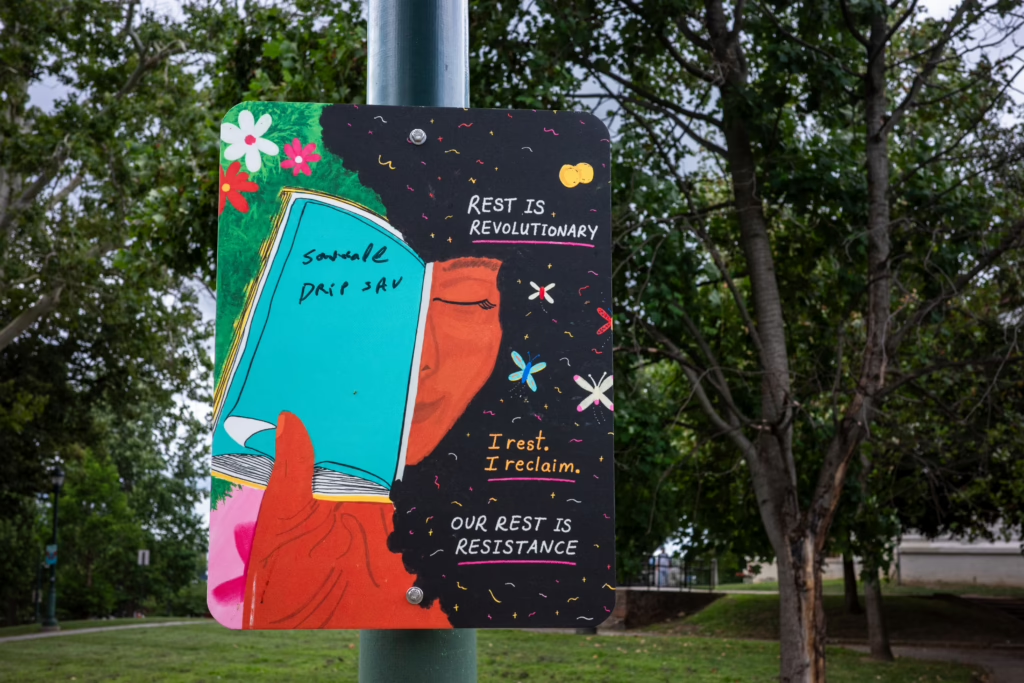
Founded by former Philadelphia school teachers Brittni Jennings and Kristin Kelly, Afromation Avenue is a community street art initiative working to preserve the cultural integrity of Black spaces throughout the city of Philadelphia. In collaboration with local Black artists and community members, personalized positive affirmation street signs find a permanent home within the landscape of historically Black communities.
Through creative placemaking, Afromation Avenue lends itself as a social emotional guide where our stories are heard, our communities are seen, and our joy is felt.
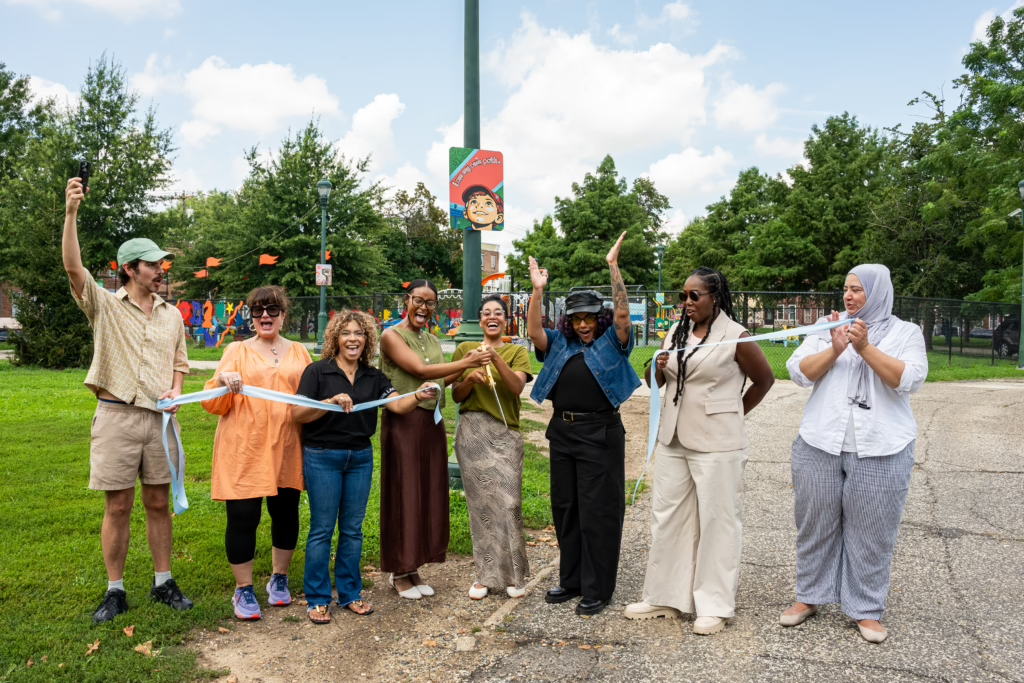
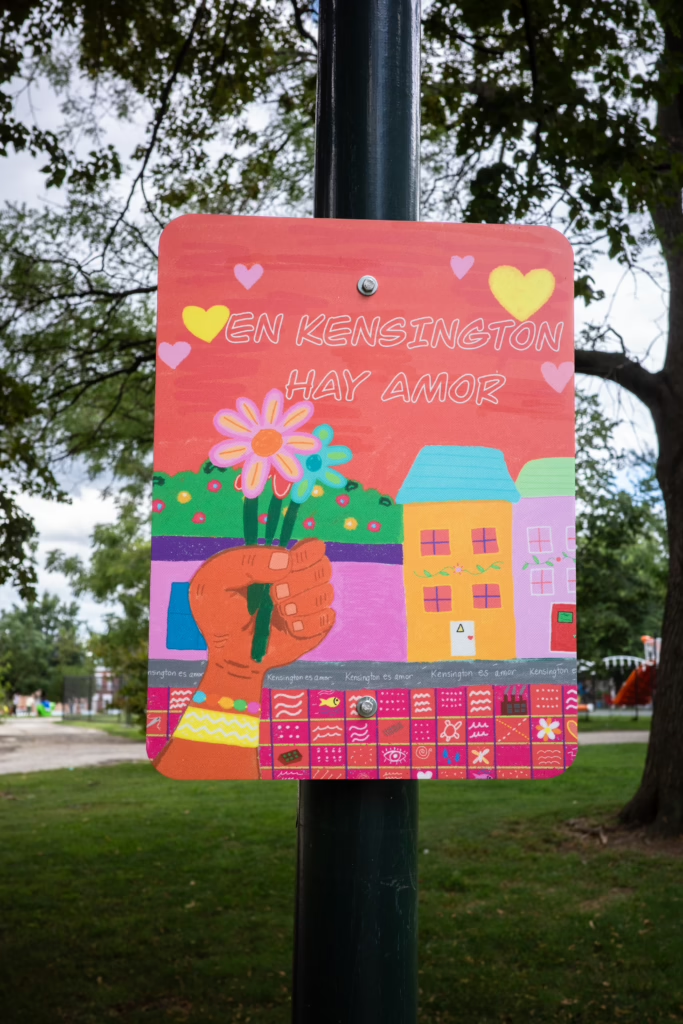
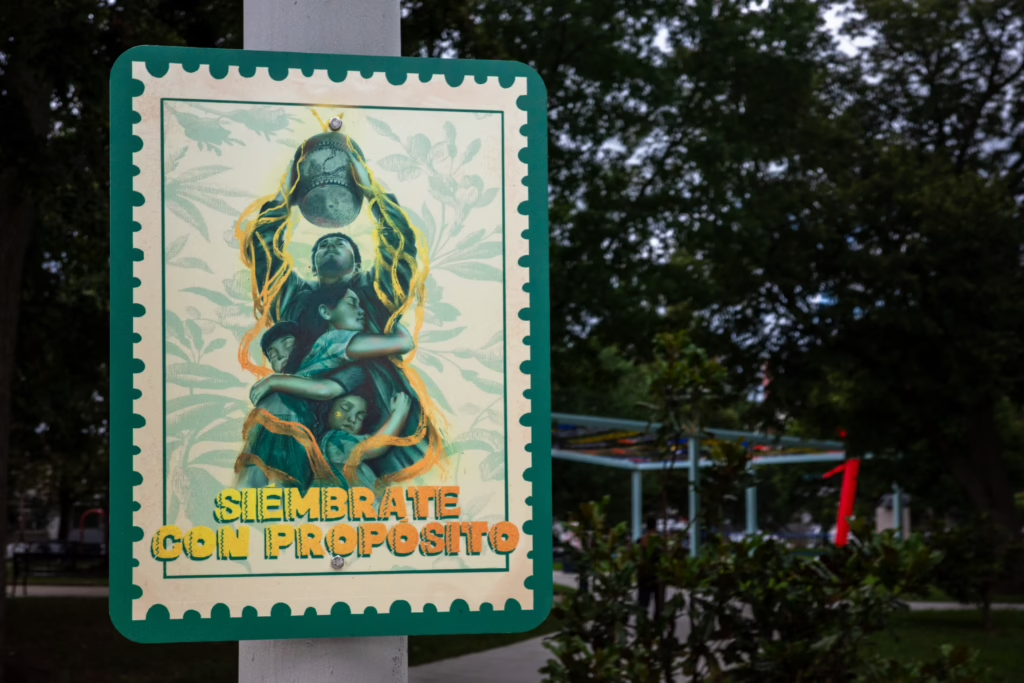
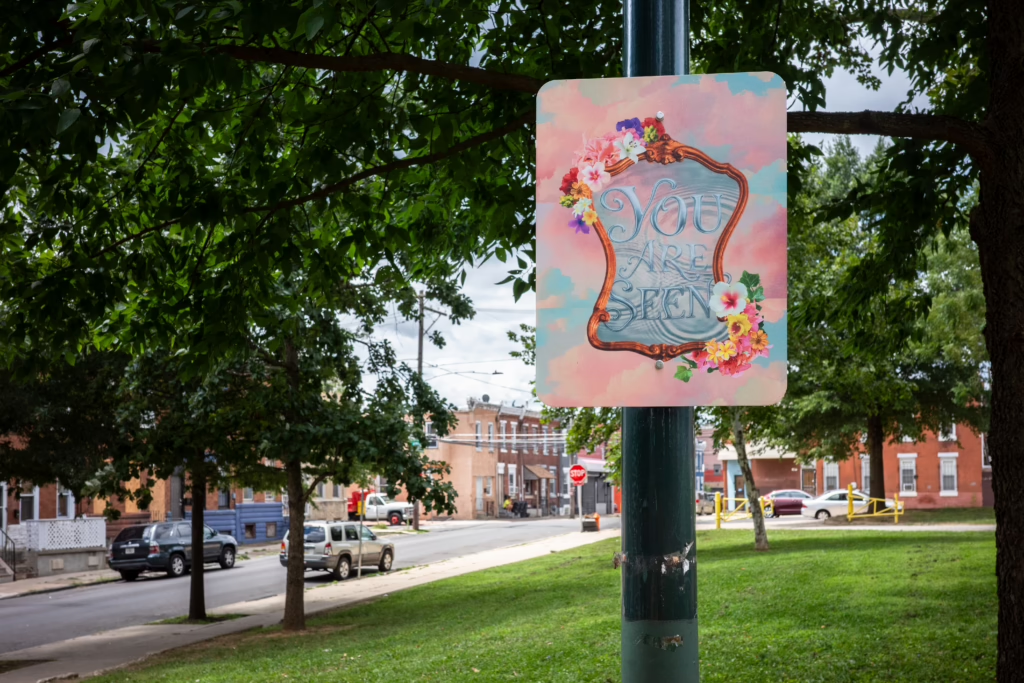
As a part of Councilmember Quetcy Lozada’s, Mural Arts Philadelphia, and Impact Services’ Heart of Kensington Creates (HOKC) initiative, Afromation Avenue installed its fourth iteration of curated, positive affirmation street signs in the Kensington community in the following locations:
- McPherson Library
- Free Church of St. John
- Conwell Middle School
- Harrowgate Park
About Afromation Avenue
A public art project “for the neighborhood by the neighborhood,” Afromation Avenue engages local Black artists and community members, and brings the resulting artworks into the streetscapes of historically Black communities.
The project is the brainchild of Brittni Jennings and Kristin Kelly, artists and Philadelphia public educators. From the project’s inception, Jennings and Kelly have been deliberate in their collaboration with local Black artists and Mural Arts’ Fellowship for Black Artists to authentically represent the communities they serve, and dedicated to their mission of challenging the monolithic narratives surrounding Black culture and history in America.
Street signs are used to guide and regulate the traffic flow of people; they assist in helping others get from one familiar place to another. Afromation Avenue lends itself as a social emotional guide in hopes of cultivating spaces of reflective thought and conversation while honoring the cultural identity of each community.
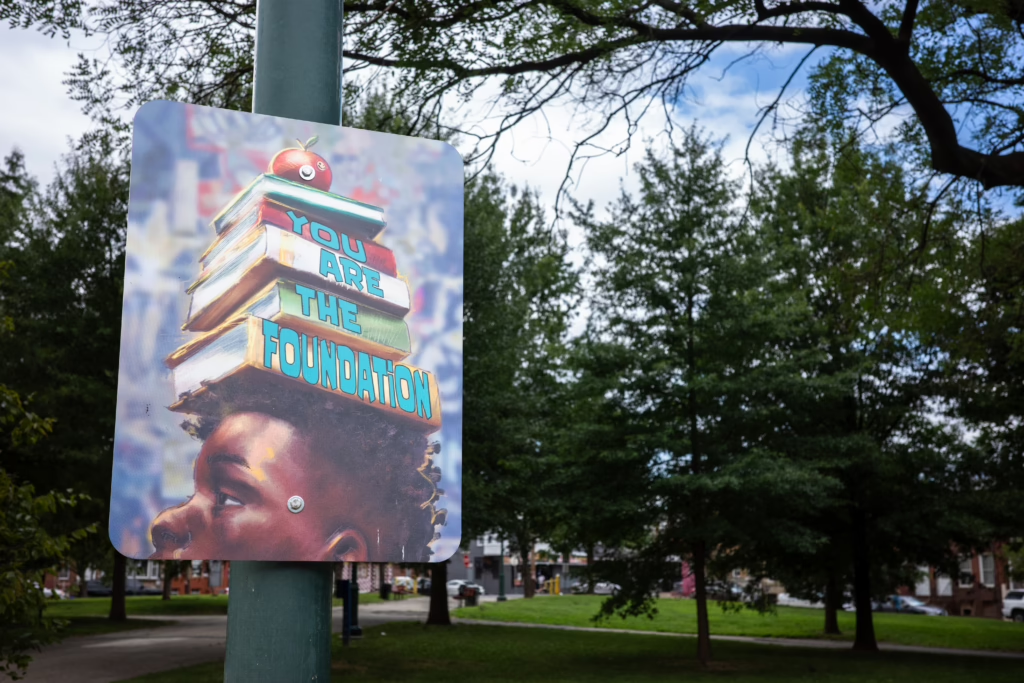
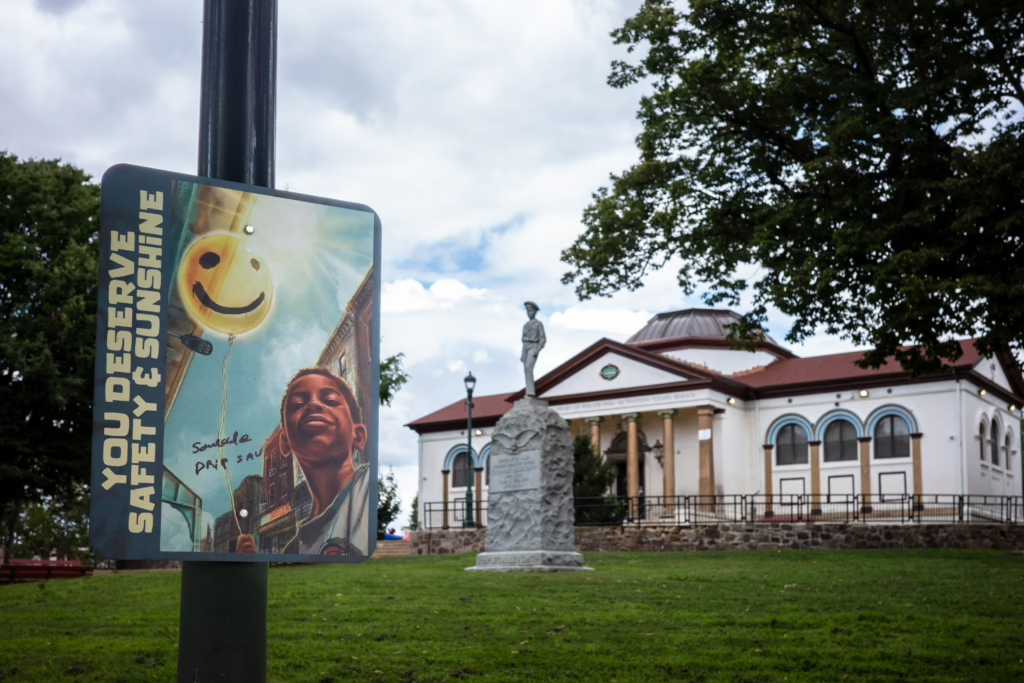
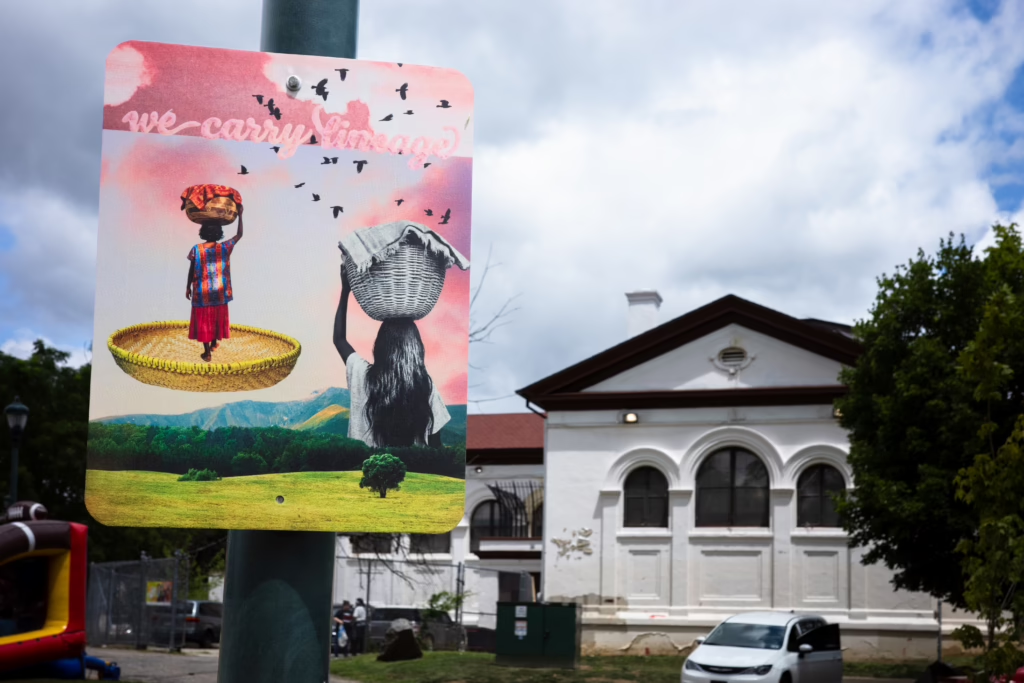
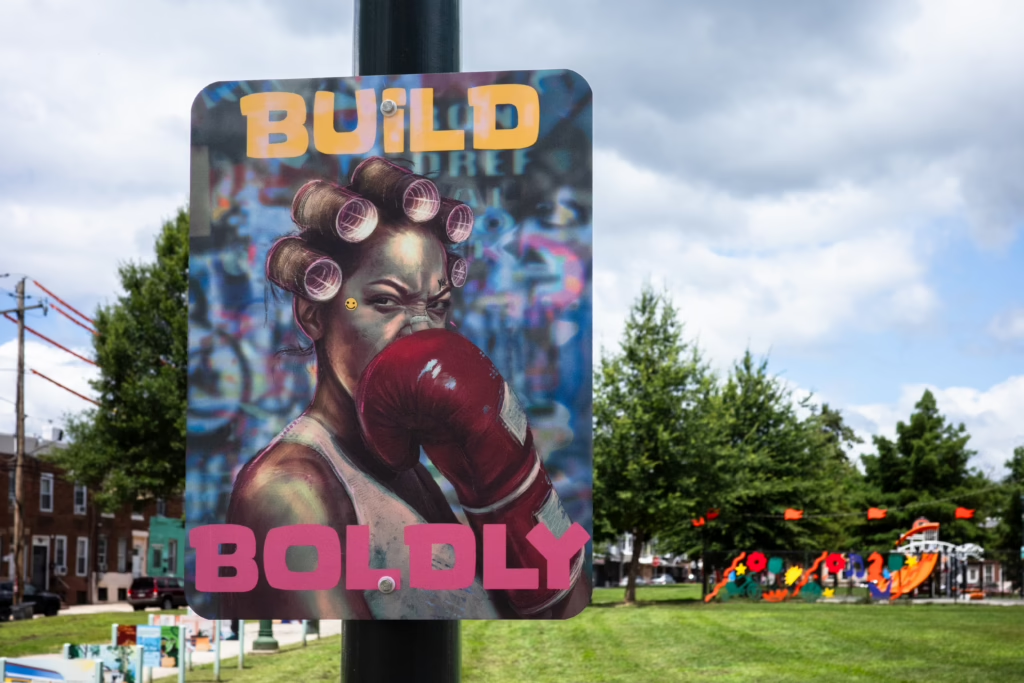
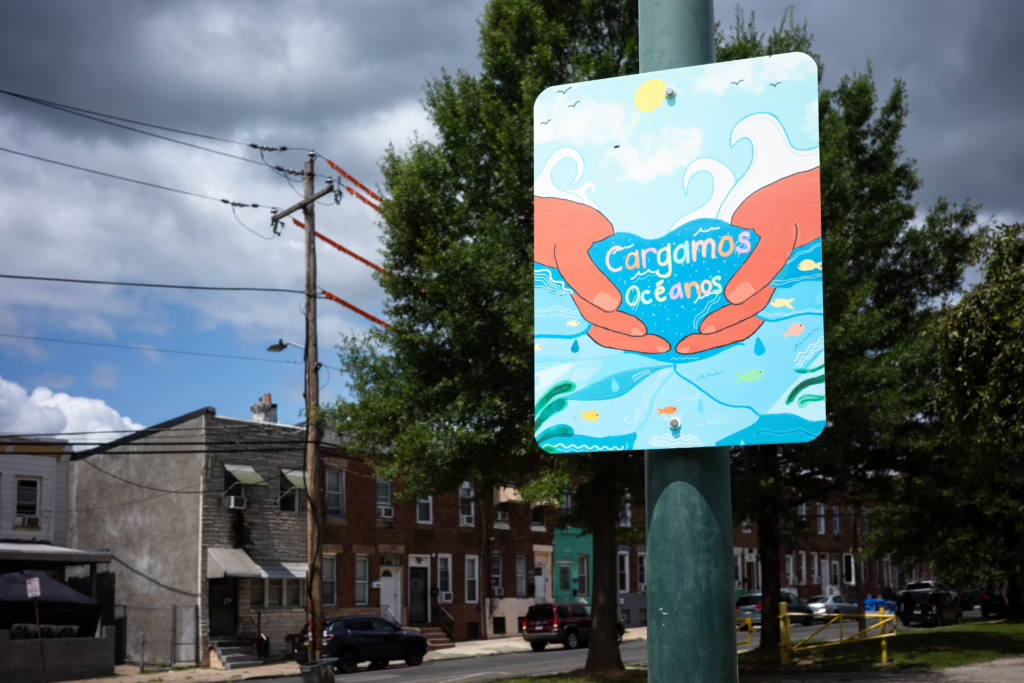
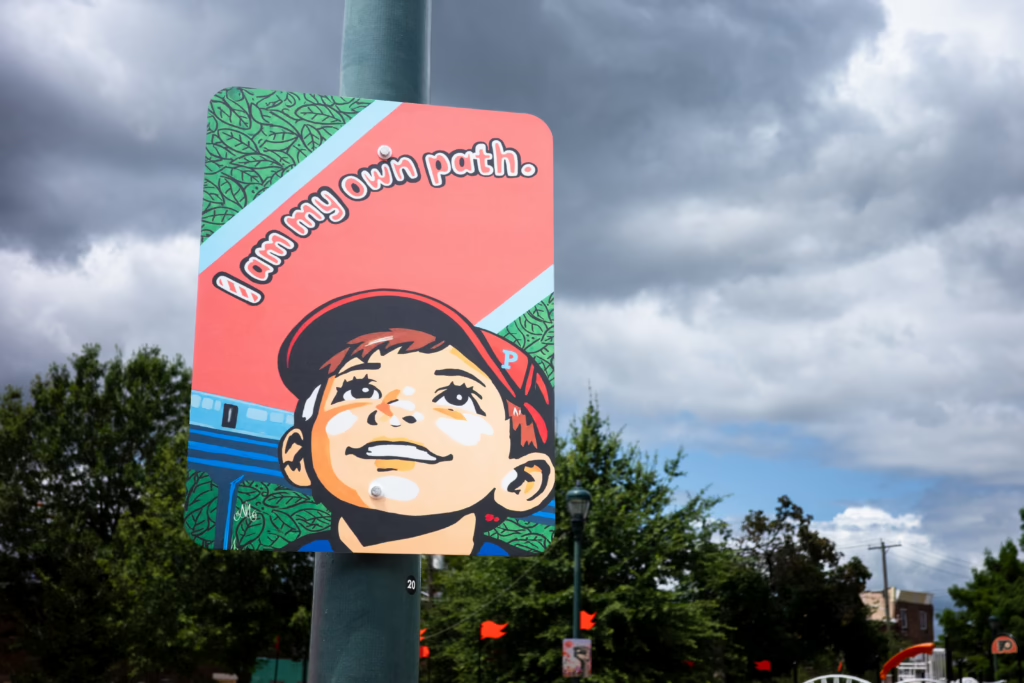
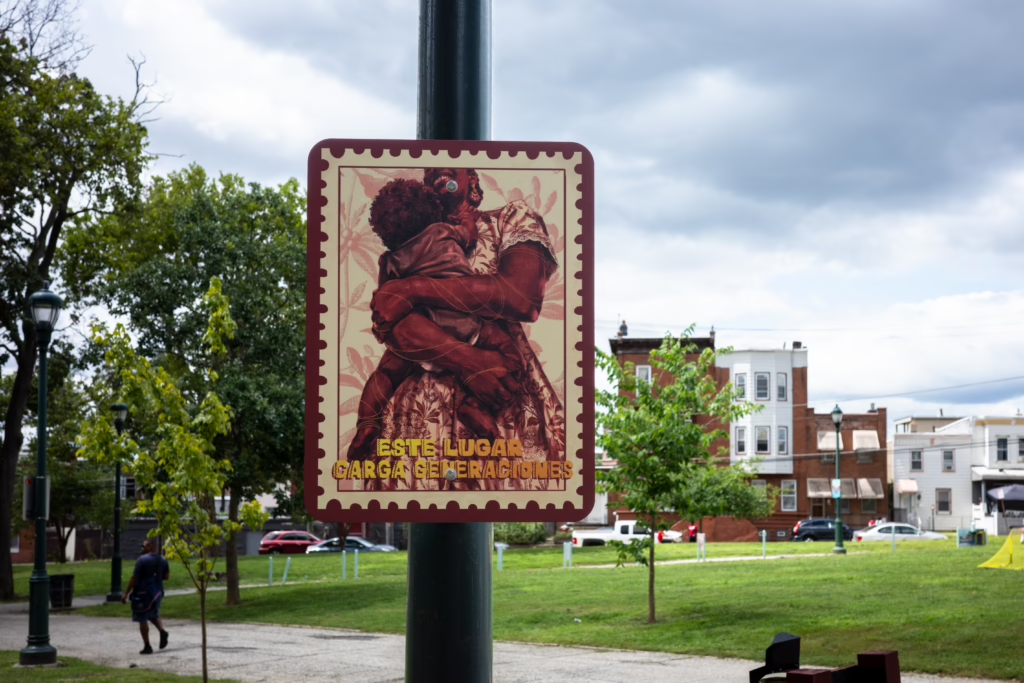
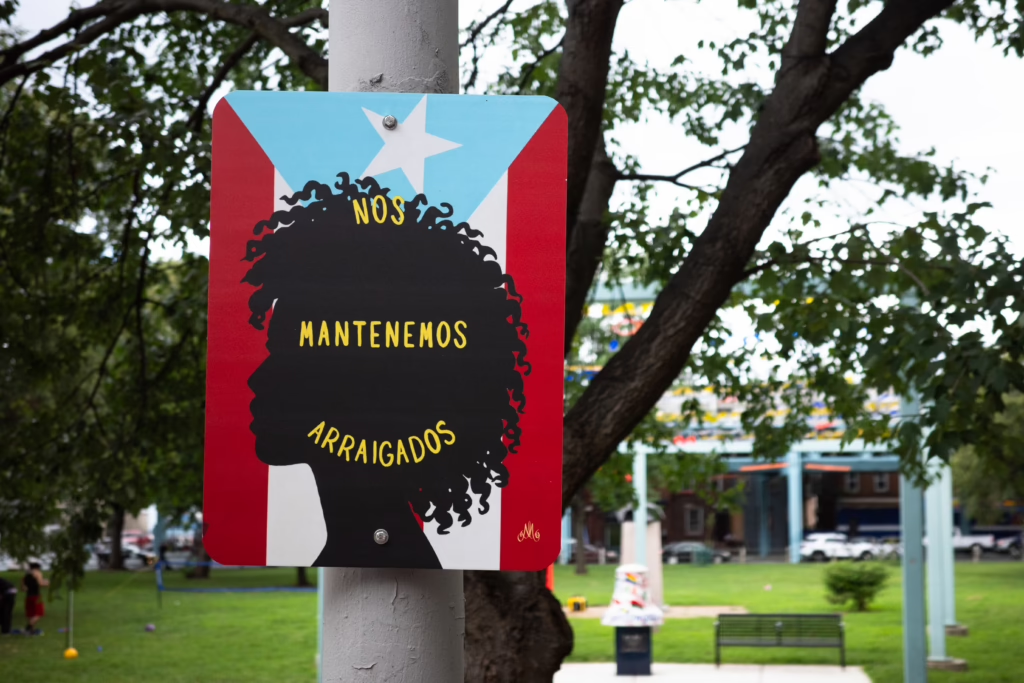
More About the 2026 Artists:

Brittni Jennings is a passionate Philadelphia educator, social justice advocate, and community artist dedicated to dismantling systemic inequities through public art. At the core of her practice is a commitment to person-first discourse that centers the Black American experience and empowers Black youth to reclaim their autonomy. Her work in urban education has earned her widespread recognition, including the Lindback Award for Distinguished Teaching and the David McCullough Prize for Excellence in Public History.
Jennings merges education with public art to cultivate community healing and historical preservation. As the co-curator of the street art project Afromation Avenue, she extends her pedagogy beyond classroom walls by placing positive affirmation signs—personalized by Black communities—throughout Philadelphia to honor areas of Black historical significance.
Jennings has designed learning environments that serve as incubators for civic action. She has written curriculum for the School District of Philadelphia, the National Constitution Center, and Eastern State Penitentiary Museum, while facilitating professional development on both local and national level. Holding a master’s degree in urban education, Jennings operates on the belief that humanizing, justice-centered spaces are the key to fostering both a wealth of knowledge and a wealth of character.
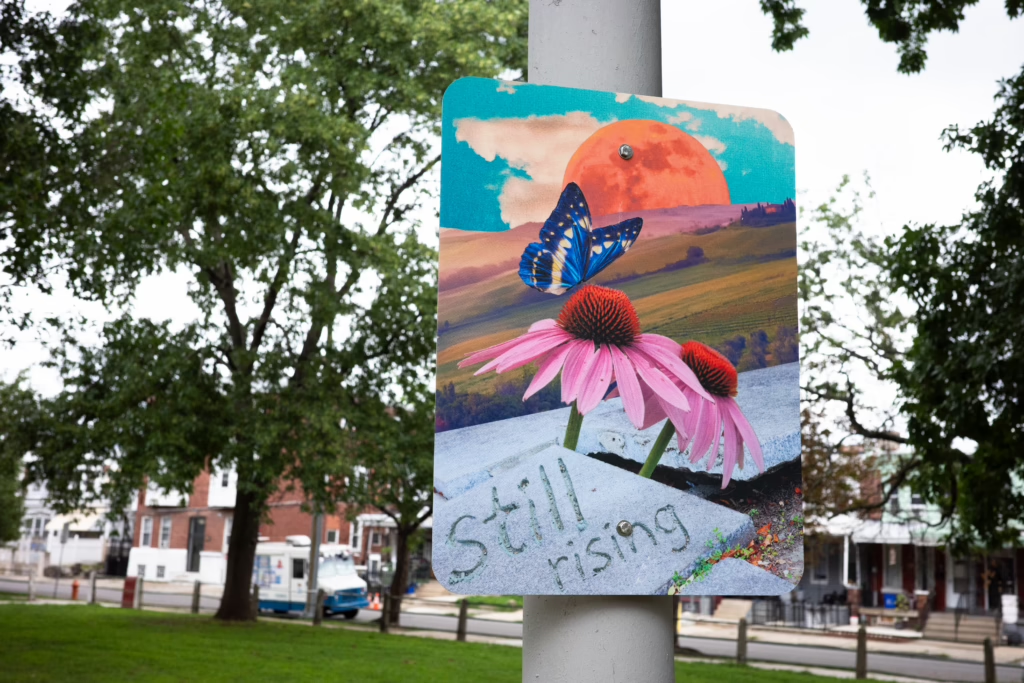
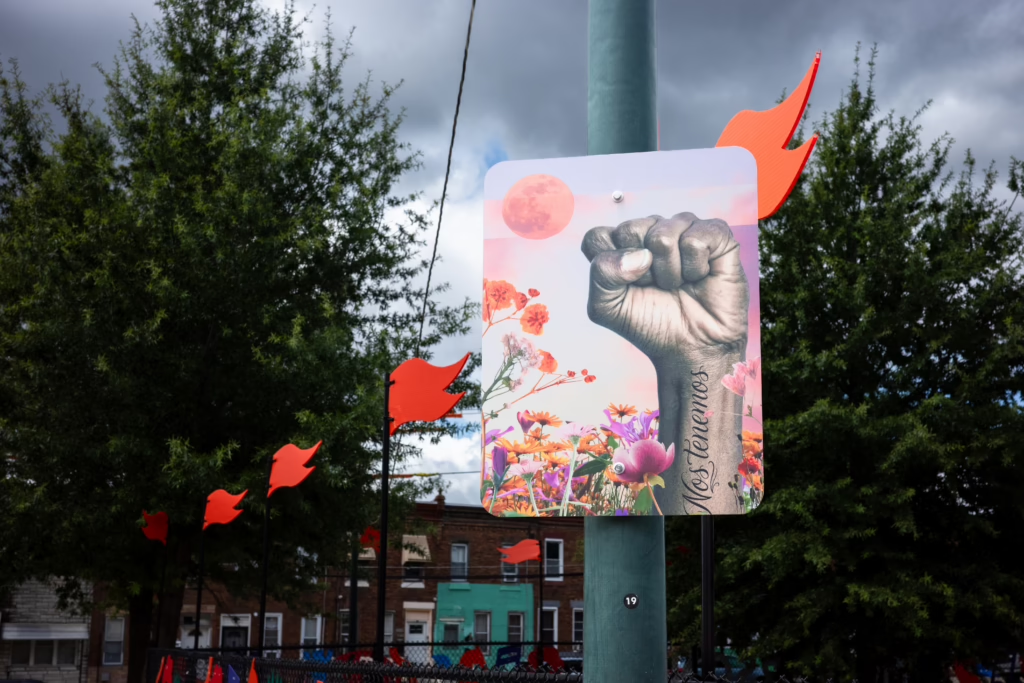
Artist Statement: “This collection is a visual intervention rooted in love, memory, and reclamation. So much of how others define Kensington is tied to its systemic struggles and vulnerabilities; I want these street signs to act as a public sanctuary for healing. By taking familiar urban elements—like the iconic North Philly row homes—and blending them with ethereal wildflowers, cosmic moons, and ancestral symbols, my goal is to intentionally disrupt the weight of urban trauma and give people walking down the street a soft place to land, a moment to just pause, breathe, and feel held.
“My work is a deep celebration of solidarity, identity, and the heavy grace of our history as members of the diaspora—serving as a mirror, reminding the community that our greatest resource has always been each other, and reflecting a profound sense of dignity back to the neighborhood. My goal is to honor the invisible weight and ancient heritage that Black and Brown communities carry forward every single day, bridging the gap between the diaspora and the block. This body of work is my way of stripping away the negative labels outsiders place on Kensington, and instead, letting the people who live here define their own immense value.
“Ultimately, this installation is an anthem of resilience and the audacity to bloom against all odds, capturing the true grit of this community. By including these vivid dreamscapes directly onto the neighborhood’s brick and mortar, I’m inviting Kensington to look upward, to hold fast to one another, and to remember that our life and beauty will always find a way to crack through the pavement.”
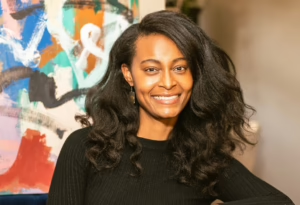
Kristin Kelly is an educator in Philadelphia with 14 years of experience teaching multiple grades and subjects, from early childhood education to high school English. She graduated with a degree in English from Bloomsburg University, where she encountered the writings of Frantz Fanon, a figure who remains central to Afromation Avenue’s practices and mission.
In the classroom, Kelly develops interdisciplinary units that examine culture, representation, and power. Her favorite unit to date, Black Horror Noire, explored film through a psychoanalytical lens, expanding the definition of horror to include colonial power, the erosion of identity, and racial terror embedded within domestic space. Her interest in systems and space extends beyond teaching into research. She has written papers such as ‘The Feminization of Poverty’ and ‘The Human Terrain System,’ as well as her graduate dissertation, ‘The Lack of Green Spaces in Predominantly Black Neighborhoods,’ which examined environmental inequities in urban communities. This focus on representation and environment also informs her artistic practice. A photographer at heart, Kelly’s work examines the human condition, urban decay, and the ‘underworld’ of subway systems in cities she visits. As a cofounder of Afromation Avenue, she integrates photography with drawings inspired by her surroundings. Her favorite piece to date, Black Lives, Take Up Space, depicts a cityscape with a Black child doing a wheelie, based on a child she photographed years earlier. A self-taught digital artist, Kelly continues to merge her photography with original illustrations, extending her exploration of space, visibility, and identity across mediums.
Artist Statement: “My work explores the relationship between people, place, and memory. As a photographer, I am drawn to people, landscapes, and neighborhoods. In my digital art, I ask many of the same questions: What does it mean to belong to a place? How do we stay rooted? How can we imagine freedom, rest, and care? My work often uses Black figures, natural imagery such as gardens, seeds, soil, water, clouds, trees, and hands to think through that connection.
“I am a self-taught digital artist, and my drawings are about feeling, truth, and possibility. I am interested in making work that feels accessible while still speaking to deeper themes of resistance, collective care, healing, and liberation. I want the real and the imagined to come together in actual places, actual people, and worlds that have not fully arrived yet, but that we can still dream toward. At the center of my work is a desire to honor ordinary life, especially Black life, and to create images that remind us that rest is revolutionary, dreams can be liberation, and we are connected to the land as seeds are to soil.”
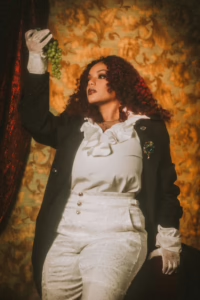
Shalina Mitchell is a multidisciplinary artist who explores identity, inclusion, and the shared human experience through portraiture, public art, and mixed media. Grounded in studies of the human form and philosophy, Shalina investigates the dynamic relationship between people and their environments. Through her work, Shalina aims to inspire empathy, provoke thought, and create spaces for meaningful conversation about our collective humanity.
Artist Statement: “My work explores identity and the relationship between people and their environments. I see art as a way to observe, interpret, and explore the human condition through the lens of lived human experience. I do this by using portraiture and symbolism to tell stories that reveal subjects that are often overlooked. Regardless of working on canvas or in public space, I am interested in creating work that encourages empathy, reflection, and meaningful dialogue.
“For Afromation Avenue, I wanted to shift the conversation about Kensington by focusing on the people who live there. Too often, neighborhoods are defined by their challenges instead of the community where resilience, care, and commitment shape them. This series of signs celebrates those everyday acts of strength through symbolic imagery that reflect education, generational knowledge, community care, safety, and hope. Each sign is rooted in the belief that these values are the true foundation of what makes the Kensington neighborhood special.
“My process begins with listening, researching, and community outreach to understanding the history and lived experiences of the community. I think deeply about how public art becomes part of a neighborhood’s visual language and how it can contribute to a living infrastructure that people encounter in their everyday lives. Through composition, symbolism, and text, I create imagery that is direct enough to communicate its message while leaving space for personal interpretation.
“I believe public art has the power to preserve stories, honor lived experiences, and challenge the narratives that are often placed on communities. Rather than asking viewers to focus on what Kensington lacks, this work invites them to recognize what has always been present: resilience, love, knowledge, and collective care. My hope is that these signs create moments of pride and reflection while reminding people that a community is built not only by its buildings and streets, but by the people who continue to shape its future.”
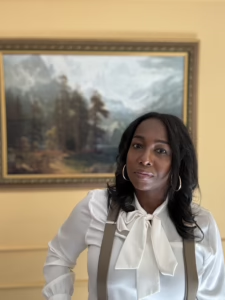
Marrita Richardson is a Philadelphia-based visual artist whose work captures the exceptional beauty within everyday Black life. Working primarily in acrylics, she blends pop art, surrealism, and sacred iconography to explore themes of resilience, divinity, and identity. Richardson believes that Black art is mainstream art and that every community deserves access to it. Through her paintings, exhibitions, and creative initiatives, she strives to make art both reflective and reachable, inviting viewers to see beauty and belonging in themselves and the world around them.
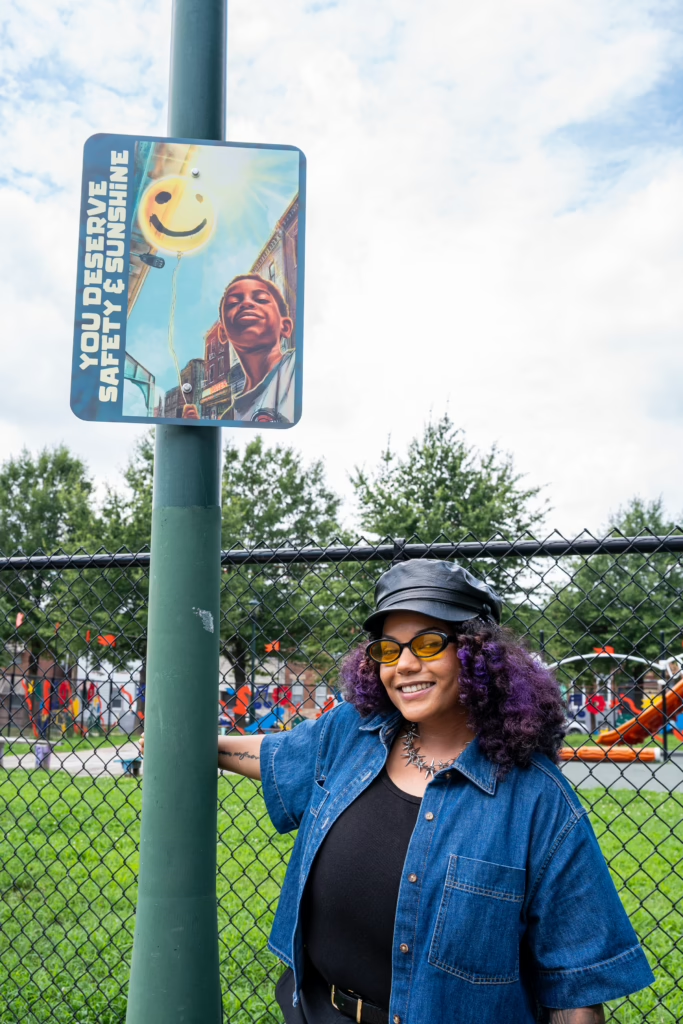
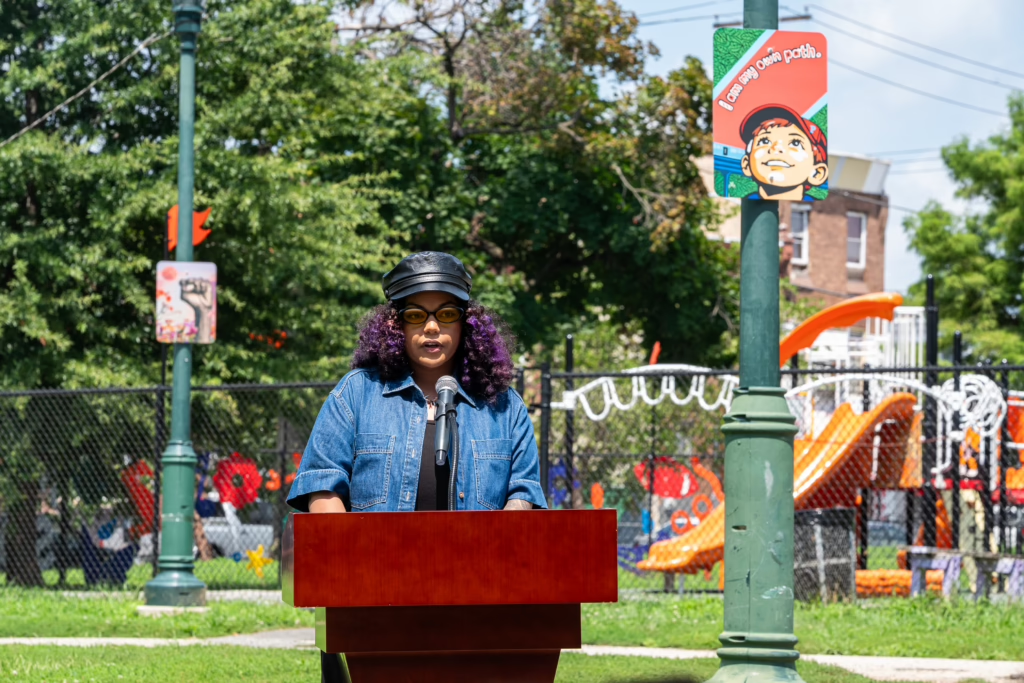
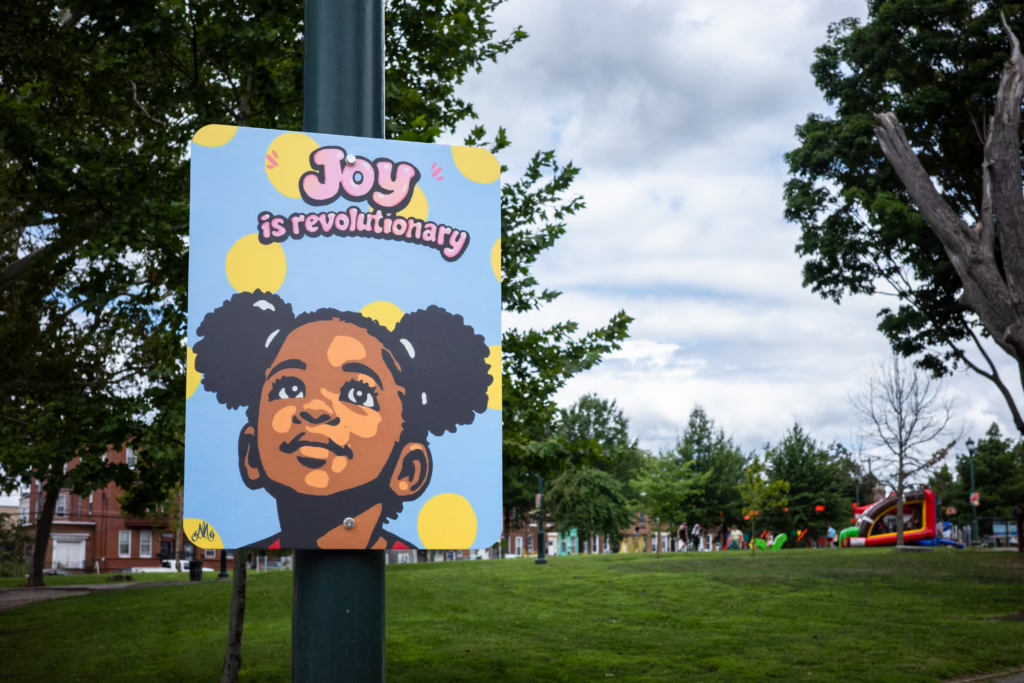
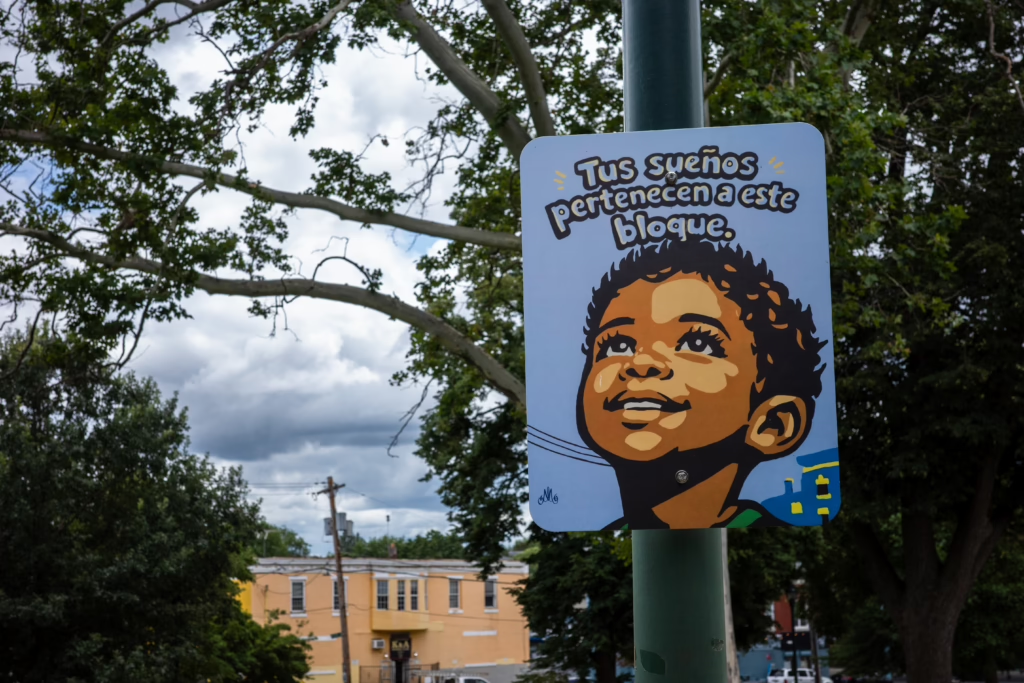
Artist Statement: “When I began this series, I kept landing on one question: ‘What do I want a child to feel when they see themselves in art?’ I used that question to guide these five paintings. Four of the five paintings shows a child from the Kensington community with their heads lifted towards the sky. For me, this gesture represents hope and optimism. The final painting shows the silhouette of a woman against the Puerto Rican flag. This piece is a nod to the cultural influence of Puerto Ricans in Kensington. I wanted the work to serve as a banner of pride and identity.
“In each piece, I wanted the child to feel like the main character in their own story. I also wanted the diversity of the community on full display. Representation was important throughout the series. I wanted children from different backgrounds to see themselves reflected in the work and feel celebrated. The paintings are colorful, playful, and intentionally illustrative in an effort to make each piece look like it was pulled from a children’s book. This represents a slight shift from my previous pop art work, in an effort to connect with younger viewers. Together, the art tells a story told by the young residents of Kensington. It is a story of dignity, pride, and youthful Optimism.
“I hope that these paintings encourage young people to keep looking up. I hope the children of Kensington recognize that they belong on art and they are worthy of celebration, because children deserve to see themselves reflected in public spaces. I want these works to remind them that they are a valued part of their community, and this art was created with them in mind.”